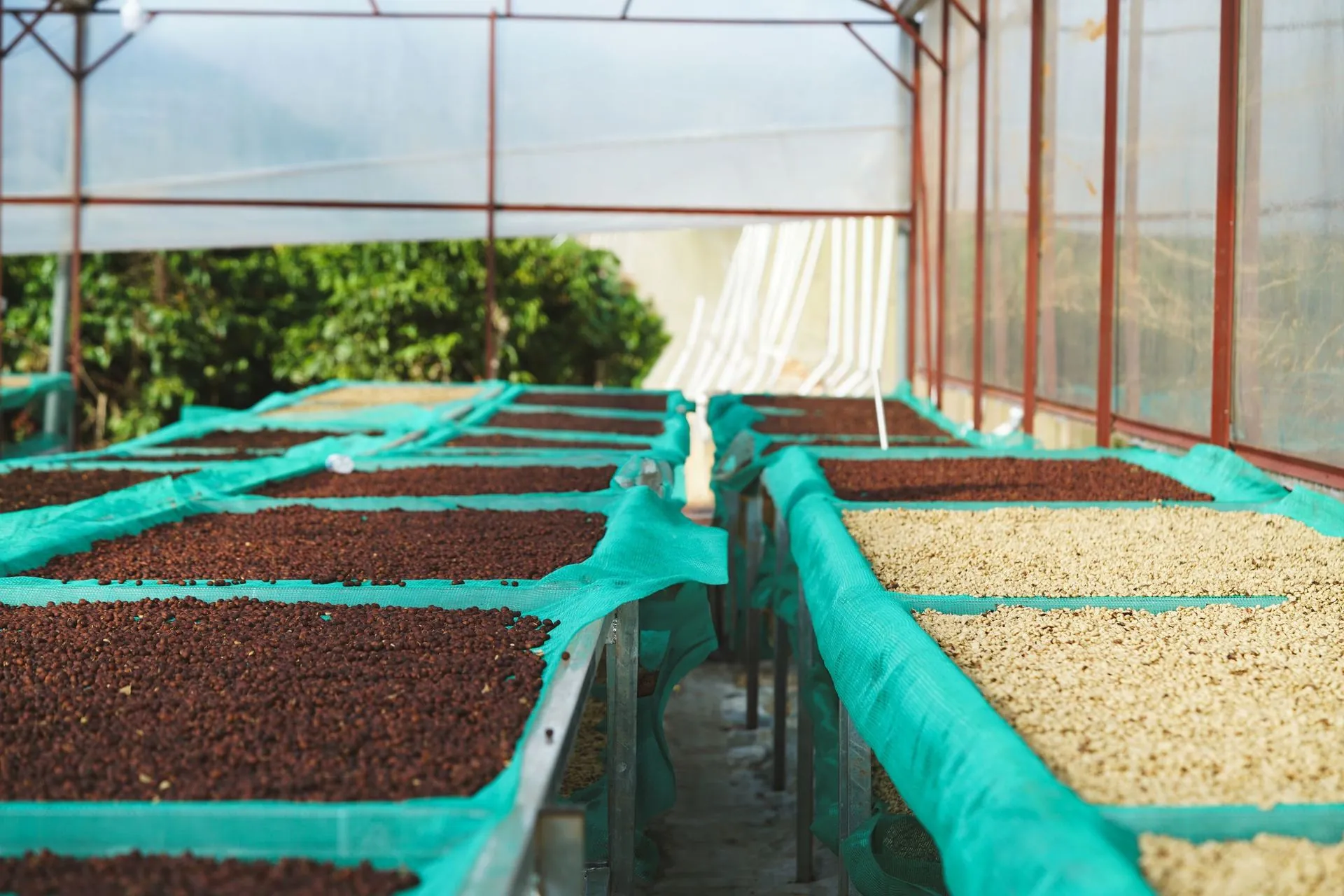
A few years ago, "anaerobic" was a word you heard at competitions. Today it appears on roaster menus everywhere, next to newer terms such as thermal shock, carbonic maceration and co-fermented. Some of these coffees are among the most exciting in specialty coffee. Others have started one of the biggest debates the industry has had in years.
Here is what the terms mean, what they do to the cup and what to ask before you buy.
First, what fermentation is
Every coffee ferments. Once a cherry is picked, yeasts and bacteria start feeding on the sugars in the fruit. In a washed coffee, that fermentation removes the sticky mucilage before washing. In a natural, it happens inside the drying cherry.
What has changed is control. Producers now manage the time, temperature, oxygen and microorganisms involved, the way a winemaker or a brewer would, to steer the flavours that develop.
Anaerobic fermentation
In an anaerobic fermentation, cherries or depulped beans go into sealed tanks with little or no oxygen. Carbon dioxide builds up and pushes out the air, and the microorganisms that thrive in that environment produce different compounds than in an open tank. Some experts prefer the word "anoxic", which describes the low-oxygen environment more precisely, but "anaerobic" is the name that stuck.
The fermentation can last from a day to several days, and it is followed by a washed, honey or natural process. That is why an anaerobic coffee is not a process of its own but a fermentation step inside one.
In the cup: intense fruit (tropical fruit, red berries, ripe stone fruit), wine-like or liqueur notes, sometimes spices such as cinnamon, and a heavy, syrupy body. Done well, the result is vivid and memorable. Pushed too far, it tastes boozy, vinegary or like overripe fruit.
Other controlled fermentations
- Carbonic maceration: whole cherries ferment in a tank filled with carbon dioxide, a technique borrowed from wine. It often gives clean, bright fruit.
- Double fermentation: two fermentation stages, for example one with the whole cherry and another after depulping.
- Selected yeasts: producers add a chosen yeast strain to make the fermentation more predictable.
- Thermal shock: beans are washed with hot water and then cold water after fermenting, which some producers use to lift aroma.
Each producer has their own recipe, so two coffees with the same label can taste very different.
Co-fermented and infused coffees: the debate
This is where the arguments begin. In a co-fermented coffee, the producer adds something from outside the cherry to the tank: fruit pulp, fruit juice, spices or other ingredients. The coffee absorbs those aromas, and the cup can taste strongly of strawberry, passion fruit, cinnamon or wine. Some coffees are also infused with flavours after fermentation.
Supporters see it as creativity and a way for producers to earn more. Critics raise three concerns:
- Transparency. A cup that tastes of passion fruit because passion fruit was added is not the same as a coffee that developed that note on its own. Buyers and customers have a right to know which is which.
- Competitions. Some competitions and buyers consider added ingredients a way of "cheating" the score, and several have set rules about what can enter a tank.
- Allergens. If fruit, spices or other ingredients are added, people with allergies should be told.
There is no single industry rule yet. The practical answer is simple: ask, and expect a clear answer.
What to ask before buying
- What exactly happened in the tank? Duration, temperature, whether it was sealed, and whether any yeast, fruit, spice or other ingredient was added.
- Is the flavour from the coffee or from an addition? A good supplier will tell you plainly.
- How consistent is it? Ask whether the same fermentation is repeated lot after lot. Experimental coffees can change a lot from one harvest to the next.
- How will you describe it to customers? If you sell a co-fermented coffee, say so on the bag and the menu.
- Does it fit your menu? Intense fermentations shine as a special filter or tasting coffee. As a daily espresso, they can tire customers quickly.
Roasting fermented coffees
Many roasters find that heavily fermented coffees develop quickly and that their fruit fades if the roast goes too dark. Lighter roasts and shorter development usually protect the character. Taste the coffee over several days after roasting: some of these profiles change faster than a classic washed coffee.
Is it worth it?
A well-made anaerobic coffee can be one of the most exciting things on a menu, and it gives producers a way to show skill and earn better prices. The key is honesty: knowing what you are buying and telling your customers the same.
At Almaguer, each lot lists its process, and the fermentation is shown separately so you can see what was done. If you want the details of a specific lot, ask us, or order samples and cup it next to a washed coffee from the same region.